
What Is Doxycycline?
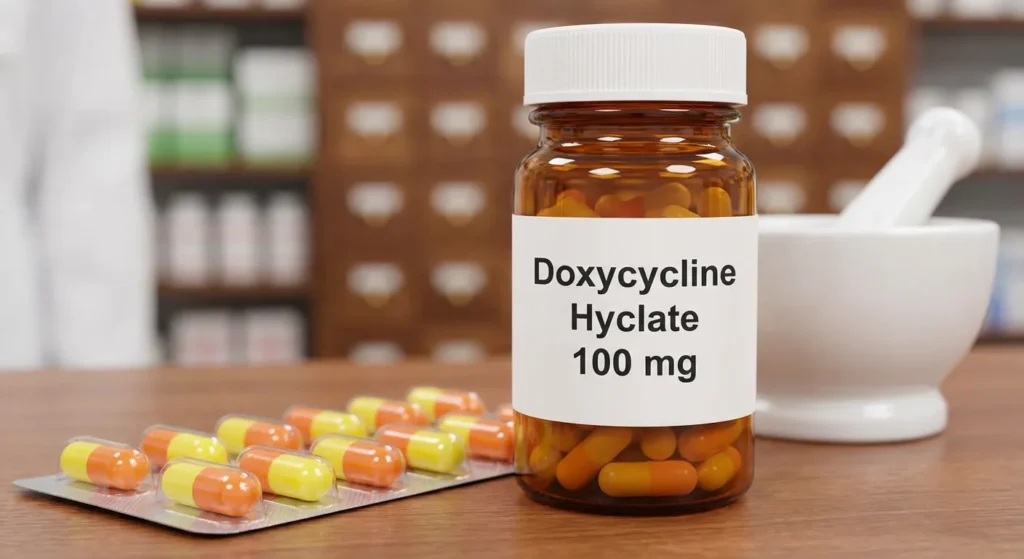
Doxycycline is a broad-spectrum tetracycline antibiotic used to treat and prevent a wide range of bacterial infections. It is one of the most commonly prescribed antibiotic medications worldwide and is available only with a doctor’s prescription.
Doxycycline works by inhibiting bacterial protein synthesis, which prevents the growth and spread of bacteria in the body. It also has anti-inflammatory properties, making it effective not only against infections but also against inflammatory skin conditions like acne and rosacea.
There are two primary salt forms of doxycycline available:
- Doxycycline hyclate — water-soluble; the most common form used in capsules and tablets
- Doxycycline monohydrate — very slightly water-soluble; often gentler on the stomach
⚕️ Important: Doxycycline is an antibiotic medication. It will not work against viral infections such as colds, the flu, or COVID-19. Using antibiotics when they are not needed contributes to antibiotic resistance — a serious global health concern.
Brand Names of Doxycycline
| Brand Name | Form |
|---|---|
| Doryx® / Doryx® MPC | Delayed-release tablet |
| Oracea® | Delayed-release capsule (rosacea only) |
| Monodox® | Capsule |
| Acticlate® / Acticlate® CAP | Tablet / Capsule |
| Vibramycin® (discontinued Aug 2025) | Capsule / Oral liquid |
What Is Doxycycline Used For?
Doxycycline treats a broad spectrum of bacterial infections and conditions. Below is a comprehensive overview of its approved and common uses.
Bacterial Infections
Doxycycline is prescribed for bacterial infections affecting many parts of the body, including:
- Urinary tract infections (UTIs)
- Respiratory infections — pneumonia, bronchitis, chest infections
- Sexually transmitted infections (STIs) — chlamydia, gonorrhea, syphilis
- Eye infections
- Gum disease (periodontal disease)
- Skin and soft tissue infections
Acne and Rosacea
Doxycycline is widely used in acne treatment because it kills the bacteria (Cutibacterium acnes) that infect pores and reduces the natural oils that cause breakouts. For rosacea — a skin condition causing facial redness, flushing, and pimples — doxycycline (especially Oracea® 40mg) reduces inflammation without functioning as a traditional antibiotic at that low dose.
Malaria Prevention and Treatment
For travelers heading to malaria-endemic regions, doxycycline serves as an effective malaria prophylaxis. It is taken starting 1–2 days before travel, continued throughout the trip, and for 4 weeks after returning. Note: doxycycline does not provide complete protection on its own — always use insect repellent, mosquito nets, and protective clothing alongside it.
Lyme Disease
Doxycycline is the first-line treatment for Lyme disease in adults and children over 8 years old. It may also be used preventively in people bitten by a tick in high-risk areas.
Bioterrorism-Related Infections
Doxycycline is used to treat or prevent exposure to:
- Anthrax (inhalational exposure)
- Plague
- Tularemia
Other Conditions
- Rocky Mountain spotted fever
- Sexually transmitted infection prevention (post-exposure prophylaxis in certain circumstances)
- Mite, tick, and lice-transmitted infections
Doxycycline Dosage & Forms
Available Dosage Forms
Doxycycline comes in several formulations to suit different patient needs:
- Capsules (standard and extended-release)
- Tablets (regular and delayed-release)
- Oral suspension / liquid
- Injectable solution (for hospital use when oral dosing isn’t possible)
Common Doxycycline Doses
| Condition | Typical Adult Dose |
|---|---|
| Bacterial infections | 100mg every 12 hrs on Day 1, then 100mg once daily |
| Acne / Rosacea (Oracea®) | 40mg once daily in the morning |
| Malaria prevention | 100mg once daily (start 1–2 days before travel) |
| Anthrax post-exposure | 100mg twice daily for 60 days |
| Lyme disease | 100mg twice daily for 10–21 days |
Pediatric Dosing
- Children under 8 years: Doxycycline is generally not recommended due to the risk of permanent tooth discoloration and effects on bone growth. Exceptions include life-threatening conditions like anthrax and Rocky Mountain spotted fever.
- Children 8 years and older weighing less than 45 kg: Dose is weight-based (typically 4.4 mg/kg/day), determined by a doctor.
- Children 8 years and older weighing 45 kg or more: Standard adult dosing typically applies.
⚠️ Doryx® MPC uses slightly higher doses (120mg where standard doxycycline uses 100mg). Do not substitute one brand for another without consulting your doctor or pharmacist.
How to Take Doxycycline
Taking doxycycline correctly maximizes effectiveness and reduces the risk of side effects like esophageal irritation — a common but avoidable issue.
General Instructions
- Take with a full glass of water (8 oz / 240ml) — this helps push the medication down and protects the esophagus
- Stay upright for at least 30 minutes after taking — lying down can cause the pill to sit in the esophagus and cause irritation or ulceration
- Take at the same time each day to maintain consistent blood levels
- Complete the full course — even if you feel better, stopping early risks the infection returning and contributes to antibiotic resistance
Food and Milk Interactions
- Most doxycycline brands can be taken with food or milk if they upset your stomach
- Oracea® capsules must be taken on an empty stomach — at least 1 hour before or 2 hours after meals
- Alcohol should be avoided as it can reduce the effectiveness of the antibiotic
Handling Missed Doses
- Take the missed dose as soon as you remember
- If it is almost time for your next dose, skip the missed dose entirely
- Never double up to make up for a missed dose
Swallowing Tips
- Delayed-release tablets: Swallow whole — do not crush, split, or chew
- Doryx® tablets/capsules: May be carefully broken and sprinkled on a spoonful of cool applesauce; swallow immediately without chewing
- Oral liquid: Shake well before each use; measure with a proper dosing syringe or cup
Doxycycline Side Effects
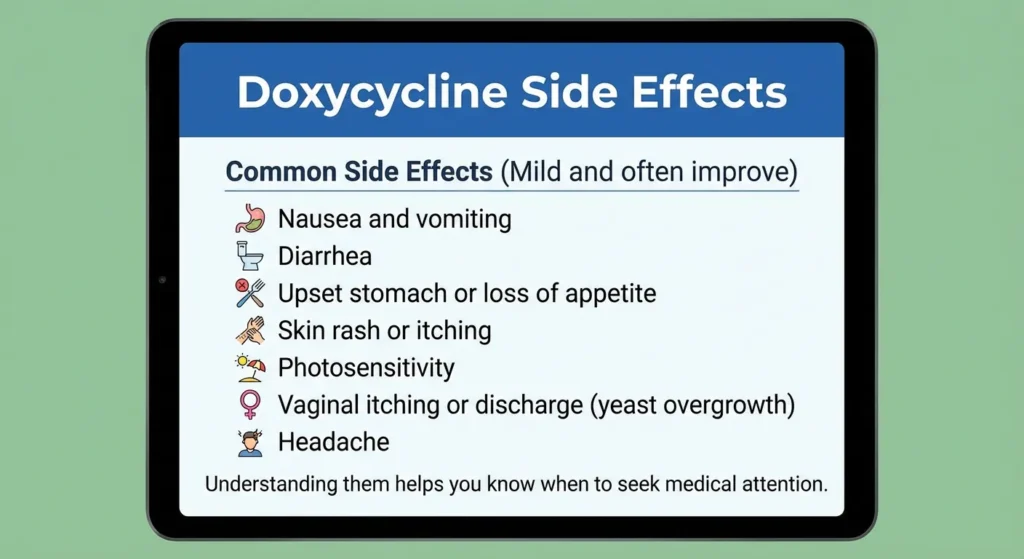
Like all antibiotic medications, doxycycline can cause side effects. Understanding them helps you know when to seek medical attention.
Common Side Effects
These are generally mild and often improve as your body adjusts:
- Nausea and vomiting
- Diarrhea
- Upset stomach or loss of appetite
- Skin rash or itching
- Photosensitivity (increased sensitivity to sunlight)
- Vaginal itching or discharge (yeast overgrowth)
- Headache
Sun Sensitivity — What to Know
Doxycycline significantly increases your skin’s sensitivity to ultraviolet (UV) light, which can result in severe sunburn even with brief sun exposure. While taking doxycycline:
- Avoid direct sunlight between 10 AM and 3 PM
- Apply SPF 30+ sunscreen daily, even on cloudy days
- Wear protective clothing, sunglasses, and hats
- Avoid tanning beds or UV lamps
Serious Side Effects — Seek Immediate Medical Attention
Call your doctor right away or go to the emergency room if you experience:
- Severe allergic reaction (anaphylaxis): Swelling of the throat or tongue, hives, difficulty breathing
- Stevens-Johnson syndrome (SJS): Blistering, peeling, or loosening of the skin; red skin lesions; fever and sore throat
- Intracranial hypertension: Severe headache, blurred or double vision, vision loss
- Severe watery or bloody diarrhea — may indicate Clostridioides difficile infection (C. diff)
- Tooth discoloration — yellowing or graying of permanent teeth (especially a concern in children under 8)
- Liver problems: Dark urine, yellowing of the skin or eyes (jaundice), upper stomach pain
- Signs of autoimmune reaction: Fever, joint pain, rash, unusual weakness
📞 In case of overdose or emergency: Call Poison Control at 1-800-222-1222 or emergency services at 911. You can also report serious side effects to the FDA via MedWatch at fda.gov/Safety/MedWatch or by calling 1-800-332-1088.
Drug Interactions
Doxycycline interacts with a number of medications, supplements, and substances. Always inform your doctor and pharmacist of everything you are taking.
Medications That Reduce Doxycycline’s Effectiveness
| Interacting Substance | Effect | Action |
|---|---|---|
| Antacids (aluminum, magnesium, calcium) | Bind to doxycycline, reducing absorption | Take doxycycline 1–2 hours before or after |
| Iron supplements / multivitamins with iron | Significantly reduce absorption | Take doxycycline 2 hrs before or 3 hrs after iron |
| Calcium supplements | Reduce absorption | Space by at least 1–2 hours |
| Laxatives containing magnesium | Reduce absorption | Space doses appropriately |
| Proton pump inhibitors (omeprazole, lansoprazole) | May reduce effectiveness | Discuss with your doctor |
Medications That Interact Dangerously
- Warfarin and blood thinners — doxycycline may increase anticoagulant effects, raising bleeding risk; close monitoring required
- Isotretinoin (Accutane) and acitretin — combining with doxycycline significantly increases the risk of intracranial hypertension; this combination is contraindicated
- Penicillin antibiotics (amoxicillin, ampicillin) — doxycycline may interfere with penicillin’s bactericidal activity
- Phenobarbital, phenytoin, carbamazepine — these anticonvulsants may reduce doxycycline’s blood levels
- Birth control pills / hormonal contraceptives — doxycycline may reduce their effectiveness; use a backup non-hormonal contraceptive (condom, diaphragm) during treatment
Who Should NOT Take Doxycycline?
Doxycycline is not suitable for everyone. Tell your doctor before starting treatment if any of the following apply:
- Allergy to doxycycline, minocycline, tetracycline, demeclocycline, or any other tetracycline antibiotic
- Liver disease — doxycycline is metabolized by the liver; impaired function may increase side effects
- Kidney disease — slower elimination can increase drug levels in the body
- Lupus (SLE) — doxycycline may worsen this autoimmune condition
- Intracranial hypertension (pseudotumor cerebri) — history of this condition is a significant risk factor for doxycycline-induced elevated intracranial pressure
- Asthma with sulfite sensitivity — some doxycycline formulations contain sodium metabisulfite
- Current use of isotretinoin or acitretin — risk of dangerous intracranial hypertension
Special Populations
Doxycycline During Pregnancy
Doxycycline is generally not recommended during pregnancy. It can cross the placenta and affect:
- Bone growth in the developing fetus
- Permanent tooth discoloration if taken in the second half of pregnancy
If you become pregnant while taking doxycycline, notify your doctor immediately. A doctor may only recommend it during pregnancy if the benefits clearly outweigh the risks (e.g., life-threatening infection with no safer alternative).
Doxycycline While Breastfeeding
Doxycycline passes into breast milk and may affect bone and tooth development in a nursing infant. It is generally advised to avoid breastfeeding while on doxycycline, though a doctor may permit short-term use when the benefit outweighs the risk.
Doxycycline in Children Under 8 Years
Doxycycline is not recommended for children under 8 years old in routine circumstances because it can cause:
- Permanent yellowing or graying of teeth
- Impaired bone growth
Exceptions are made for life-threatening conditions such as anthrax, Rocky Mountain spotted fever, or when no safer alternative exists.
Elderly Patients (Geriatric Use)
Older patients may have reduced kidney or liver function, which can slow doxycycline elimination and increase the risk of side effects. Dose adjustments or more frequent monitoring may be required.
Storage & Disposal
How to Store Doxycycline
- Store at room temperature (between 59°F–77°F / 15°C–25°C)
- Keep away from heat, moisture, and direct light
- Do not store in the bathroom
- Keep out of reach of children — use child-resistant caps and store in a locked location
⚠️ Do not use expired doxycycline. Using outdated tetracycline antibiotics has been associated with a rare but serious condition called Fanconi syndrome, which can cause kidney damage.
How to Dispose of Doxycycline
- Do not flush doxycycline down the toilet
- Use a medicine take-back program — ask your pharmacist about locations near you
- Visit the FDA’s Safe Disposal of Medicines website for guidance: goo.gl/c4Rm4p
- If no take-back is available, mix with an undesirable substance (coffee grounds, dirt) in a sealed bag before placing in household trash
Final Thoughts
Doxycycline is one of the most trusted and versatile antibiotic medications available in modern medicine. From treating everyday bacterial infections like acne, UTIs, and chest infections to preventing life-threatening conditions like malaria and anthrax, its wide range of uses makes it an invaluable tool in a doctor’s prescription arsenal.
That said, doxycycline is not a medicine to take casually. Like all antibiotics, it comes with real responsibilities. Taking it correctly — at the right dose, at the right time, for the full prescribed course — is essential not just for your own recovery, but for protecting public health against the growing threat of antibiotic resistance. Every time an antibiotic is misused or overused, bacteria have a chance to adapt and survive, making future infections harder to treat for everyone.
If you have been prescribed doxycycline, follow your doctor’s instructions carefully, be aware of the key precautions around sun exposure, food timing, drug interactions, and contraceptive use, and never share your prescription with anyone else. If you experience any unusual or severe side effects, contact your doctor promptly or report them to the FDA MedWatch program.
Used responsibly, doxycycline is a safe, effective, and life-changing medication for millions of people worldwide. The key is always the same: the right antibiotic, for the right infection, at the right dose — and never a single day more than necessary.
FAQs
What Is Doxycycline?
Doxycycline is a prescription-only tetracycline antibiotic used to fight a wide range of bacterial infections. It works by blocking bacterial protein synthesis, preventing bacteria from growing and spreading throughout the body. It also has anti-inflammatory properties, making it effective for skin conditions like acne and rosacea — not just infections.
What Is Doxycycline Used For?
Doxycycline is used to treat bacterial infections including acne, rosacea, UTIs, chest infections, chlamydia, gonorrhea, syphilis, Lyme disease, and eye infections. It is also used to prevent malaria in travelers and to treat or prevent serious bioterrorism-related infections such as anthrax, plague, and tularemia. In low doses, it specifically treats pimples and redness caused by rosacea without acting as a full antibiotic.
Can I drink alcohol while taking doxycycline?
It is best to avoid alcohol during your course of doxycycline. Alcohol can interfere with how your body processes the medication and may reduce its effectiveness, particularly for longer treatment courses.
How long does doxycycline take to work?
For most bacterial infections, patients begin to notice improvement within 2–3 days. For acne and rosacea, it may take 4–6 weeks to see significant improvement. Always complete the full prescribed course.
Does doxycycline affect birth control?
Yes. Doxycycline can reduce the effectiveness of hormonal contraceptives (pills, patches, rings, injections). Use an additional non-hormonal method of birth control (such as condoms) throughout your treatment and consult your doctor.
Can I take doxycycline on an empty stomach?
Most forms of doxycycline can be taken with or without food, and taking it with food may help reduce nausea. However, Oracea® capsules must be taken on an empty stomach. Always check your specific product’s label.
What should I do if I miss a dose?
Take it as soon as you remember. If it is nearly time for your next scheduled dose, skip the missed dose and continue as normal. Never take two doses at once to make up for a missed one.
Is doxycycline safe for long-term use?
Doxycycline can be used for extended periods in certain situations (e.g., acne treatment, malaria prevention up to 4 months). However, long-term use increases risks of antibiotic resistance, yeast overgrowth, and photosensitivity. Your doctor will assess whether ongoing use is appropriate and may monitor you with blood and urine tests.
What is the difference between doxycycline hyclate and monohydrate?
Both forms contain the same active antibiotic, but the salts differ. Doxycycline hyclate is water-soluble and slightly more acidic, which can sometimes cause more stomach upset. Doxycycline monohydrate is less soluble but may be better tolerated by people with sensitive stomachs.
Medical Disclaimer: This content is for informational purposes only and does not replace professional medical advice. Always consult a licensed healthcare provider before starting or stopping any medication.