
Doxycycline Hyclate Side Effects: Common, Serious & Long-Term Risks

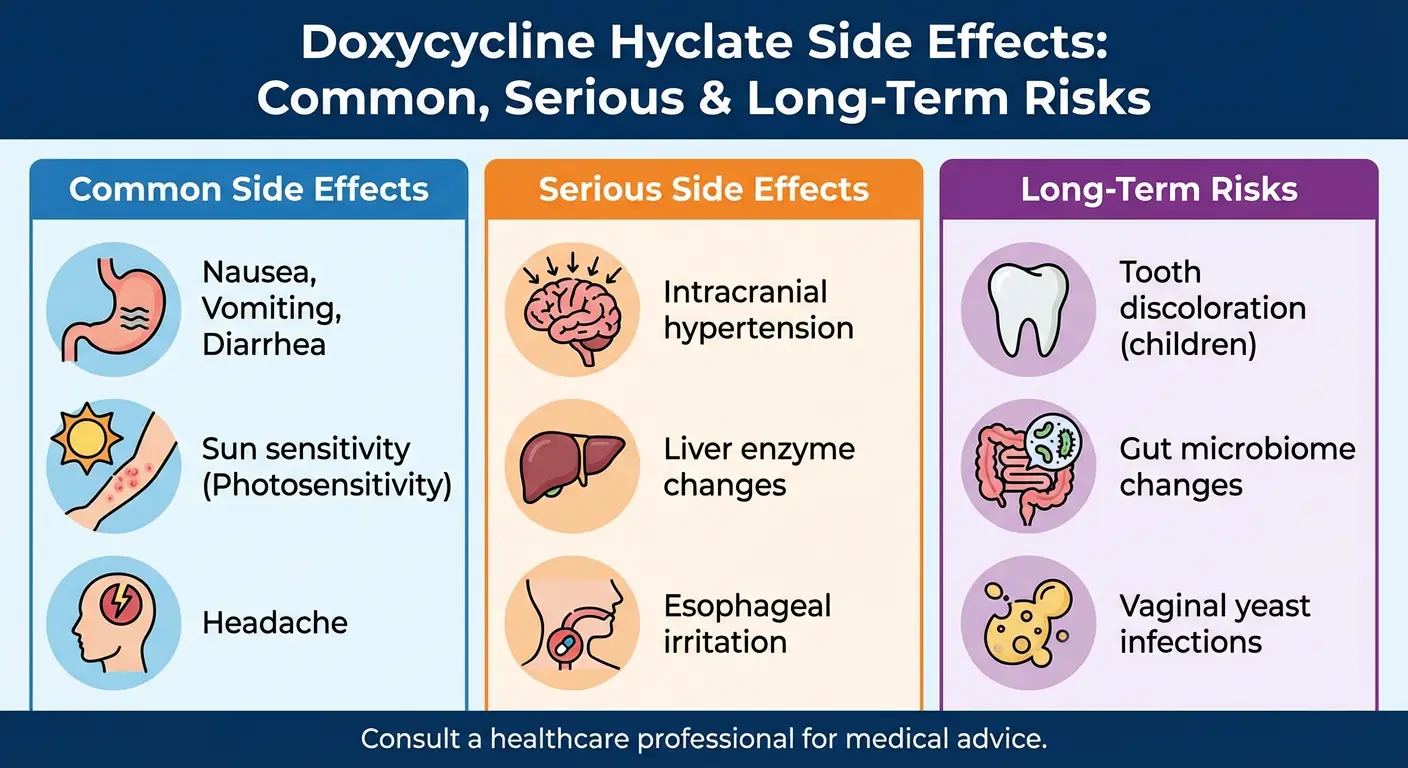
The most common doxycycline hyclate side effects include nausea, vomiting, diarrhea, photosensitivity, skin rash, and headache. Most are mild and manageable. Serious but rare side effects include Stevens-Johnson syndrome, intracranial hypertension, esophageal ulceration, and severe allergic reactions. Always contact your doctor if side effects are severe or persistent.
Understanding Doxycycline Hyclate Side Effects
Doxycycline hyclate is one of the most widely prescribed tetracycline antibiotics in the world. It is used to treat a broad range of bacterial infections — from acne and chlamydia to Lyme disease, malaria prophylaxis, and anthrax. While it is generally considered a well-tolerated antibiotic, like all medications, it carries a risk of side effects that every patient should be aware of before starting treatment.
The good news is that for most people, doxycycline hyclate side effects are mild, tend to affect the digestive system or skin, and often improve as the body adjusts to the medication. However, a smaller number of patients experience more serious adverse effects that require prompt medical attention. Understanding the full side effect profile — from the everyday to the rare — helps patients take this medication safely and confidently.
This article covers everything you need to know about doxycycline hyclate side effects, organized by severity, body system affected, and what you can do to manage or prevent them.
Common Side Effects of Doxycycline Hyclate
The following side effects are the most frequently reported by patients taking doxycycline hyclate. They are generally mild to moderate in intensity and often improve within the first few days of treatment or when the medication is taken with food and water.
Gastrointestinal Side Effects
The most common side effects of doxycycline hyclate affect the digestive system. This is partly because doxycycline hyclate is slightly more acidic than the monohydrate form, which can irritate the lining of the stomach and esophagus.
Nausea is the single most commonly reported side effect of doxycycline hyclate. It typically occurs within an hour or two of taking the medication. Taking doxycycline with food or a glass of milk can significantly reduce the likelihood and severity of nausea. However, note that Oracea — a specific low-dose brand used for rosacea — must be taken on an empty stomach, so always follow your specific prescription instructions.
Vomiting is less common than nausea but can occur, particularly with higher doses. If vomiting occurs within 30 minutes to an hour of taking a dose, contact your doctor about whether you need to retake it.
Diarrhea is another frequently reported gastrointestinal side effect. Most cases are mild and resolve on their own. However, if you develop watery, bloody, or severe diarrhea — during treatment or even weeks after completing it — this could indicate a more serious condition called Clostridioides difficile-associated diarrhea (CDAD) and requires immediate medical evaluation.
Loss of appetite and stomach upset are also common, particularly during the early days of treatment. These effects usually diminish as your body adjusts.
Esophageal irritation deserves special mention. Because doxycycline hyclate is more acidic than other forms, it has a well-documented tendency to cause esophageal irritation or even ulceration if it is not taken correctly. To prevent this, always take doxycycline hyclate with a full glass of water (at least 8 ounces) and remain upright — sitting or standing — for at least 30 minutes after taking it. Never take it right before lying down or going to sleep.
Photosensitivity
One of the most clinically significant and consistently reported side effects of doxycycline hyclate is photosensitivity — an exaggerated sensitivity of the skin to ultraviolet (UV) radiation. Patients taking doxycycline can develop an intense sunburn reaction after even brief, incidental sun exposure — sometimes within minutes.
This is not a true allergy to sunlight. It is a phototoxic reaction caused by the drug interacting with UV rays in the skin to produce reactive oxygen species that damage skin cells. The result can range from mild redness and itching to painful blisters and severe sunburn covering large areas of the body.
To manage photosensitivity while taking doxycycline hyclate:
- Apply a broad-spectrum sunscreen with SPF 30 or higher every morning, even on cloudy days
- Wear protective clothing including long sleeves, wide-brimmed hats, and UV-blocking sunglasses
- Avoid direct sunlight between 10 AM and 3 PM when UV radiation is most intense
- Completely avoid tanning beds, sun lamps, and UV phototherapy sessions
- Discontinue doxycycline and contact your doctor at the first sign of a severe skin reaction
Photosensitivity typically resolves within a few days of stopping the medication.
Skin Rash and Itching
Mild skin rashes and itching can occur with doxycycline hyclate and may be related to photosensitivity or a mild hypersensitivity reaction. A mild rash that is not accompanied by other symptoms can sometimes be managed with antihistamines, but any rash that is spreading, painful, blistering, or associated with fever should be evaluated by a doctor immediately as it may signal a serious drug reaction.
Headache
Headaches are a commonly reported but often overlooked side effect of doxycycline hyclate. Most are mild and resolve on their own. However, a persistent, severe headache — particularly one accompanied by visual disturbances, nausea, or pain behind the eyes — may be a warning sign of intracranial hypertension and requires urgent medical evaluation.
Tooth and Bone Effects
Doxycycline hyclate is known to cause permanent yellowing or graying of teeth in developing dentition. This is a well-established effect of all tetracycline antibiotics and is the primary reason doxycycline is contraindicated in children under 8 years of age and in pregnant women. In adults whose teeth are fully developed, tooth discoloration from doxycycline is not a concern for standard courses of treatment.
Vaginal Yeast Infections
Because doxycycline hyclate is a broad-spectrum antibiotic, it disrupts the balance of normal bacterial flora throughout the body — including in the vagina. This can lead to an overgrowth of Candida yeast, causing vaginal itching, discharge, and discomfort. This is a relatively common occurrence in women taking antibiotics and can be treated with over-the-counter antifungal medications. Informing your doctor if you experience these symptoms is recommended.
Serious Side Effects of Doxycycline Hyclate
The following side effects are rare but serious. If you experience any of these, stop taking doxycycline hyclate and seek medical attention immediately.
Esophageal Ulceration and Esophagitis
One of the most avoidable yet clinically significant serious side effects of doxycycline hyclate is esophageal ulceration. This occurs when a tablet or capsule gets stuck in the esophagus and the acidic drug dissolves against the esophageal wall, causing chemical burns and ulcers. Symptoms include severe pain or burning in the chest, pain when swallowing, and a feeling that something is stuck in the throat.
This complication is almost entirely preventable by taking doxycycline hyclate with a full glass of water and staying upright for at least 30 minutes afterward. Never take it immediately before bedtime.
Intracranial Hypertension (Pseudotumor Cerebri)
Doxycycline hyclate has been associated with idiopathic intracranial hypertension — a condition of elevated pressure inside the skull without an identifiable cause. Also known as pseudotumor cerebri, this condition can cause symptoms that closely mimic those of a brain tumor including severe persistent headache, blurred or double vision, ringing in the ears (tinnitus), nausea, and papilledema (swelling of the optic nerve visible on eye examination).
Women of childbearing age who are overweight or have a prior history of intracranial hypertension are at significantly increased risk. The concurrent use of isotretinoin (Accutane) with doxycycline dramatically increases this risk and this combination must be avoided entirely.
If any of these symptoms develop, discontinue doxycycline hyclate immediately and seek urgent ophthalmologic and neurologic evaluation. In most cases, the condition resolves after stopping the medication, but vision loss can occur if treatment is delayed.
Stevens-Johnson Syndrome and Toxic Epidermal Necrolysis
Stevens-Johnson syndrome (SJS) and its more severe form toxic epidermal necrolysis (TEN) are rare but potentially life-threatening skin reactions that have been reported with doxycycline hyclate. These conditions involve widespread blistering, peeling, and death of skin and mucous membranes and require immediate hospitalization.
Warning signs of SJS/TEN include a flu-like prodrome (fever, sore throat, fatigue) followed by a rapidly spreading rash with red or purple skin lesions, blistering, and peeling — particularly affecting the eyes, mouth, and genitals. If these symptoms develop, discontinue doxycycline hyclate immediately and go to the emergency room.
Drug Reaction with Eosinophilia and Systemic Symptoms (DRESS)
DRESS syndrome is a severe, potentially life-threatening drug hypersensitivity reaction that can occur with doxycycline hyclate, typically appearing 2 to 8 weeks after starting treatment. It involves a widespread skin rash, high fever, swollen lymph nodes, facial swelling, and involvement of internal organs including the liver, kidneys, heart, and lungs.
DRESS is a medical emergency. It can be mistaken for a viral illness in its early stages, so any patient who develops a rash with systemic symptoms — particularly fever and lymph node swelling — within weeks of starting doxycycline should be evaluated immediately.
Clostridioides Difficile-Associated Diarrhea (CDAD)
Antibiotic use, including doxycycline hyclate, can disrupt the normal bacterial balance of the colon, allowing Clostridioides difficile (C. diff) to proliferate and produce toxins that cause severe colitis. Symptoms include watery diarrhea occurring three or more times per day, abdominal cramping and tenderness, fever, and in severe cases, bloody stool.
CDAD can occur during antibiotic treatment or up to two months or more after completing it. Do not take anti-diarrheal medications without first consulting your doctor, as these can make the condition worse by retaining the toxins in the colon. CDAD is treated with specific antibiotics that target C. difficile.
Severe Allergic Reaction (Anaphylaxis)
A severe allergic reaction to doxycycline hyclate, while rare, is a medical emergency. Symptoms of anaphylaxis include sudden hives or widespread skin flushing, severe swelling of the throat, tongue, or lips (angioedema), difficulty breathing or wheezing, a drop in blood pressure, rapid or irregular heartbeat, and loss of consciousness.
If you experience any signs of anaphylaxis after taking doxycycline hyclate, call 911 immediately. This requires emergency treatment with epinephrine.
Liver Toxicity (Hepatotoxicity)
Doxycycline hyclate-induced liver injury, while uncommon, is well-documented. It typically presents 1 to 2 weeks after starting therapy and can range from mild hepatocellular damage to a mixed hepatocellular-cholestatic pattern. In rare cases it has been associated with DRESS syndrome. Symptoms may include yellowing of the skin or eyes (jaundice), dark urine, clay-colored stools, upper right abdominal pain, unusual fatigue, and loss of appetite.
If hepatotoxicity is suspected, doxycycline should be discontinued immediately and liver function tests should be performed. In most cases, liver function returns to normal within weeks of stopping the drug, though severe cholestatic injury may take up to 2 to 6 months to fully resolve. Reexposure to doxycycline should be avoided.
Hematologic Effects
Rare blood-related side effects include leukopenia (abnormally low white blood cell count), which can increase susceptibility to infections, and hemolytic anemia (destruction of red blood cells), which can cause fatigue, pale skin, shortness of breath, and jaundice. These conditions require medical evaluation and may necessitate stopping the medication.
Superinfection
Because doxycycline hyclate is a broad-spectrum antibiotic, it can disrupt the normal balance of microorganisms throughout the body, allowing non-susceptible bacteria or fungi to overgrow — a condition known as superinfection. Oral thrush (white patches in the mouth), vaginal yeast infections, and in rare cases more serious fungal infections can result. If superinfection develops, doxycycline should be discontinued and appropriate targeted treatment initiated.
Long-Term Side Effects of Doxycycline Hyclate
Patients taking doxycycline hyclate for extended periods — such as for chronic acne treatment or long-term malaria prevention — face a different risk profile than those on short courses. Long-term use requires regular monitoring and clinical oversight.
Antibiotic resistance is one of the most significant concerns with long-term doxycycline use. Prolonged antibiotic therapy creates selective pressure that encourages the development of resistant bacterial strains — not only the bacteria being targeted, but also normal flora organisms that can then transfer resistance genes to more dangerous pathogens. This is why antimicrobial stewardship guidelines emphasize using doxycycline for the shortest effective duration.
Chronic photosensitivity can become a persistent issue for patients on long-term doxycycline therapy, requiring consistent vigilance about sun protection throughout the duration of treatment.
Gut microbiome disruption over extended treatment periods can lead to persistent digestive issues, recurring yeast infections, and changes in bowel habits as the body’s normal bacterial balance is repeatedly affected.
Liver function changes can accumulate with long-term use, making regular monitoring of liver function tests (LFTs) important for patients on extended doxycycline courses.
Bone health — particularly in young patients — warrants monitoring with very prolonged use, as tetracyclines can form calcium complexes in bone-forming tissues. In premature infants and very young children, reversible suppression of bone growth has been observed with high-dose tetracycline therapy.
Side Effects in Special Populations
Doxycycline Hyclate Side Effects in Women
Women are generally at higher risk for certain doxycycline hyclate side effects. Vaginal yeast infections are significantly more common in women taking doxycycline due to disruption of the vaginal microbiome. Women of childbearing age — particularly those who are overweight or have a history of intracranial hypertension — are at significantly elevated risk of developing pseudotumor cerebri. Women on hormonal contraceptives should also be aware that doxycycline may reduce their effectiveness, and a backup contraceptive method should be used during treatment.
Doxycycline Hyclate Side Effects in Children
Doxycycline hyclate is contraindicated in children under 8 years of age for most indications due to the risk of permanent tooth discoloration and suppression of bone growth. In children over 8 who are prescribed doxycycline, the side effect profile is similar to adults, though photosensitivity and gastrointestinal effects should be monitored carefully.
Doxycycline Hyclate Side Effects During Pregnancy
Doxycycline hyclate is generally not recommended during pregnancy. It crosses the placenta and has been associated with retardation of fetal skeletal development and permanent tooth discoloration in the unborn baby when taken during the second half of pregnancy. If you become pregnant while taking doxycycline hyclate, contact your doctor immediately.
Doxycycline Hyclate Side Effects in Elderly Patients
Older adults are generally able to take doxycycline hyclate without specific dose adjustments, but they face a higher risk of experiencing adverse effects due to polypharmacy — the concurrent use of multiple medications — which increases the likelihood of drug interactions. Gastrointestinal side effects and photosensitivity should be monitored carefully in this population.
How to Reduce Doxycycline Hyclate Side Effects
Many of the most common doxycycline hyclate side effects can be minimized or prevented with simple measures:
Taking the medication with food or milk can significantly reduce nausea and stomach upset. Always follow this up with a full glass of water to prevent esophageal irritation. Stay upright for at least 30 minutes after each dose. Apply SPF 30+ sunscreen daily and avoid prolonged sun exposure throughout your entire course of treatment. Space out antacids, iron supplements, calcium, and multivitamins by at least 2 hours from your doxycycline dose. Avoid alcohol during treatment as it can worsen side effects and reduce the effectiveness of the antibiotic. Complete the full prescribed course without skipping doses, as irregular dosing does not reduce side effects and increases the risk of antibiotic resistance.
When to See a Doctor
Contact your doctor promptly if you experience any of the following while taking doxycycline hyclate: severe or persistent nausea, vomiting, or diarrhea; watery or bloody stools during or after treatment; a rash that is spreading, blistering, or accompanied by fever; severe headache with vision changes or pain behind the eyes; yellowing of the skin or eyes; difficulty swallowing or chest pain; signs of an allergic reaction including hives, swelling, or breathing difficulty; or any symptom that feels unusual or is significantly affecting your daily functioning.
Call 911 immediately in the event of a severe allergic reaction with throat swelling, difficulty breathing, or loss of consciousness.
To report a side effect to the FDA, contact the MedWatch program at fda.gov/Safety/MedWatch or call 1-800-332-1088. For medication overdose concerns, call Poison Control at 1-800-222-1222.
FAQs
What is the most common side effect of doxycycline hyclate?
Nausea is the most commonly reported side effect of doxycycline hyclate. It can often be reduced by taking the medication with food or milk and a full glass of water.
Can doxycycline hyclate cause permanent side effects?
In most patients, doxycycline hyclate side effects are temporary and resolve after stopping the medication. The main exception is permanent tooth discoloration in children under 8 years old and in unborn babies exposed during pregnancy — which is why doxycycline is contraindicated in these groups.
How long do doxycycline hyclate side effects last?
Common side effects like nausea, diarrhea, and headache typically improve within the first few days of treatment as the body adjusts. Photosensitivity persists throughout the entire course of treatment and usually resolves within a few days of stopping. More serious side effects like liver toxicity or intracranial hypertension may take weeks to months to fully resolve after discontinuation.
Does doxycycline hyclate cause hair loss?
Hair loss is not a commonly reported side effect of doxycycline hyclate in clinical studies. However, some patients have anecdotally reported increased hair shedding. If you are concerned about hair changes while taking doxycycline, discuss this with your doctor.
Can doxycycline hyclate affect my mental health?
Mood changes, anxiety, and depression are not listed among the well-established side effects of doxycycline hyclate in clinical literature. However, there have been rare patient reports of mood-related symptoms. If you notice significant changes in your mood or mental state while taking doxycycline, speak to your doctor.
Is it safe to drink alcohol while taking doxycycline hyclate?
Alcohol should be avoided or minimized while taking doxycycline hyclate. Alcohol can reduce the effectiveness of the antibiotic and may worsen gastrointestinal side effects like nausea and stomach upset. It can also exacerbate the liver strain associated with the medication.
Final Thoughts
Doxycycline hyclate is a highly effective and widely trusted antibiotic, but like all medications, it comes with a side effect profile that every patient deserves to understand. For the majority of people, side effects are mild, predictable, and manageable with simple precautions — taking it with food and water, protecting skin from the sun, and staying upright after each dose goes a long way toward a comfortable treatment experience.
The more serious side effects — including Stevens-Johnson syndrome, intracranial hypertension, esophageal ulceration, DRESS syndrome, and C. diff colitis — are rare, but they are real. Knowing the warning signs means you can act quickly if something goes wrong, which can make a significant difference in outcomes.
Always take doxycycline hyclate exactly as prescribed, complete the full course, and keep open communication with your doctor or pharmacist throughout your treatment. If in doubt about any symptom you are experiencing, do not hesitate to seek medical advice — your health and safety always come first.
Medical Disclaimer: This article is for informational purposes only and does not constitute medical advice, diagnosis, or treatment. Always consult a licensed healthcare professional before starting or changing any medication. Visit https://doxycycline.blog/ for more information.